Game
I counted every choice the player makes.
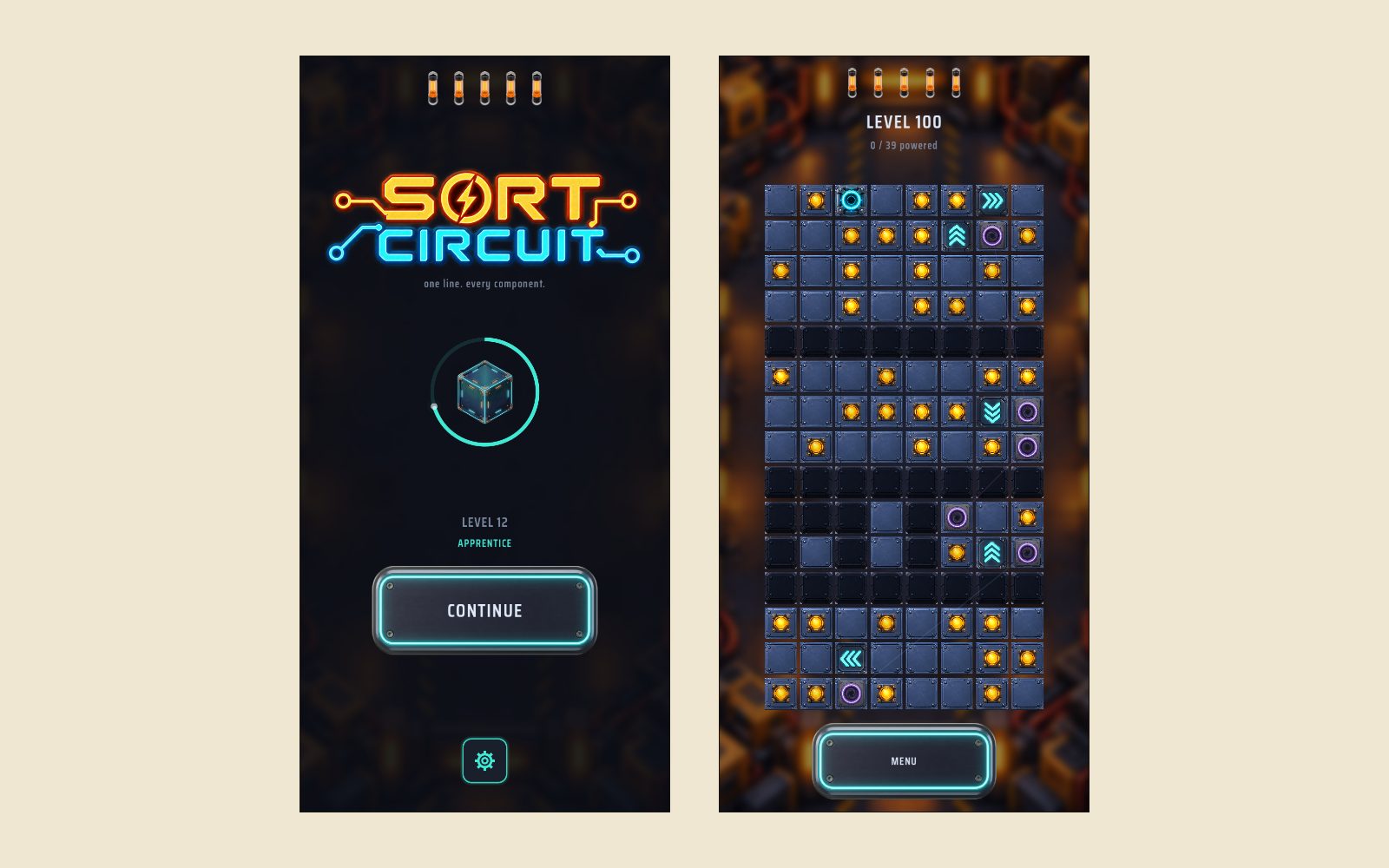
A one-line circuit puzzle: draw a single path that powers every component. The most useful thing I learned was that my mechanics weren't doing what I thought they were.
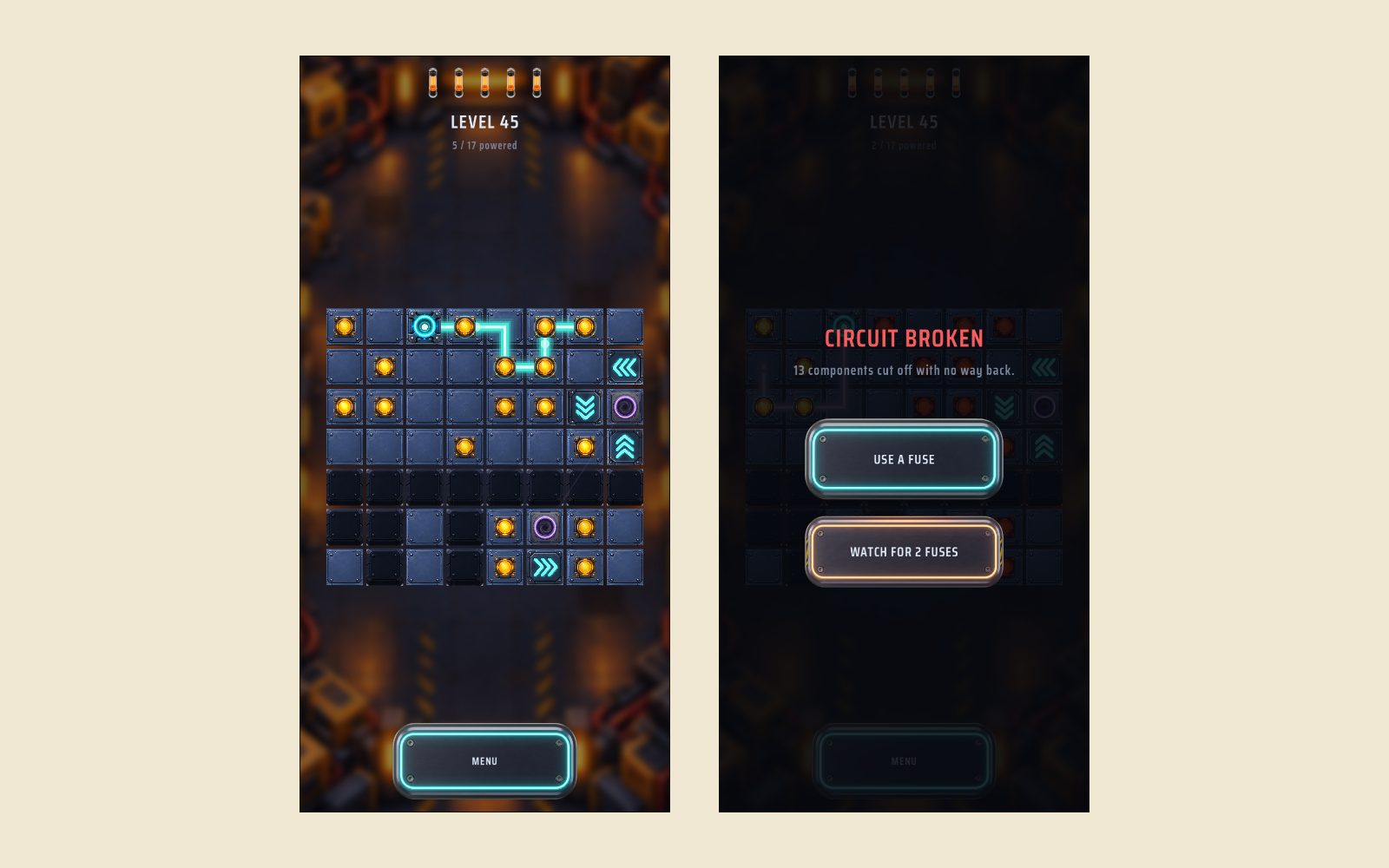
- The problem
- I wanted levels that look easy and aren't, and needed to know if the game's features actually created choices.
- What I built
- A one-line circuit puzzle game with 106 levels, and a count of every point where the player has to choose.
- The result
- 106 levels and an Android build ready. You can play it in your browser on this page.
How I built it
The problem
Harder is not the same as fewer answers.
The goal was levels that look easy and aren't. My first reading was that a clever level should have exactly one solution, and I spent a long session proving that is close to impossible on these boards.
But nobody had asked for one solution. The real target was bait: a wrong turn that doesn't fail straight away, and mechanics that interact so they trick the player. The shape I'm building toward is five to seven levels that teach each mechanic alone, then levels that combine them.
What the numbers said
The walls were doing the work.
I measured every point where a player has to choose. Of 948 such forks, 838 were cases where one branch simply dies. Those decisions come from spatial reasoning, which on these boards means the walls.
The mechanics I'd added mostly weren't creating choices. Portals were structural in 56 of 56 levels: remove one and the level breaks, so the player never chooses it. One-way tiles made things worse, because removing them increased decisions. More than half the locks were inert.
The tempting conclusion is to drop the mechanics. The better one is that mechanics need levels built around them before they matter.
Play it here
The real game, in your browser.
Exported from the same Godot project as the Android build. Drag from the glowing node and draw one path through every component. It takes a few seconds to load.
What is not done yet
This is the part I'm working on.
Listed on the home page as Now building.
- Making the mechanics consequential. The next experiment moves walls after the path is drawn, then measures again. Removing early wall scatter has already raised forks per level from 14.2 to 17.5.
- Not yet released on Google Play.
- The web build is for trying it. Ads, purchases and leaderboards only exist on Android, and they switch off in the browser.